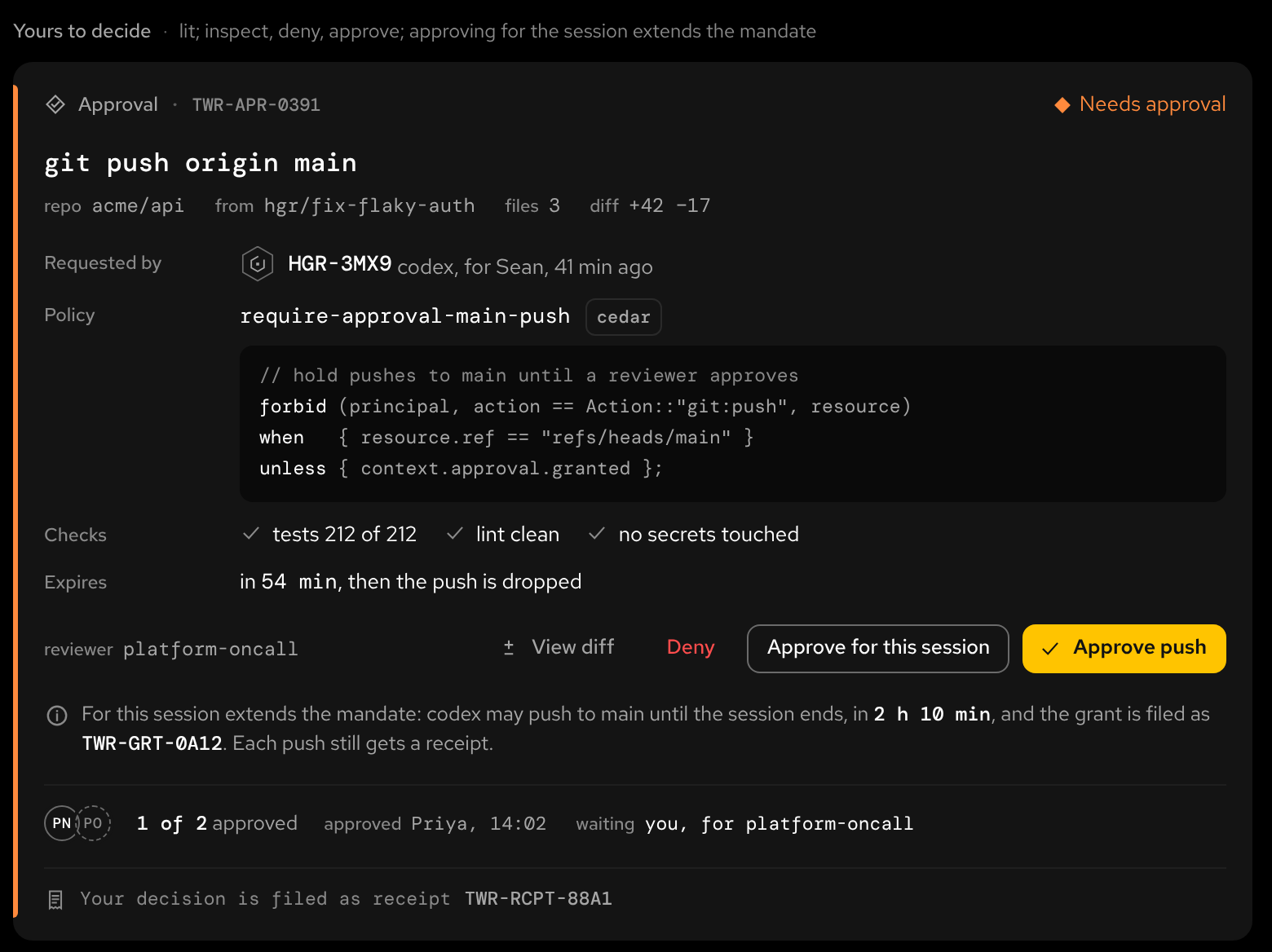
Twenty-six agents. Five need you.
Needs you is the console's first tab: held tool calls and questions, one decision at a time, soonest to expire on top.
- Decide and the next one rises; the agent continues the moment you do.
- A deny needs a reason. It goes on the receipt and back to the agent.
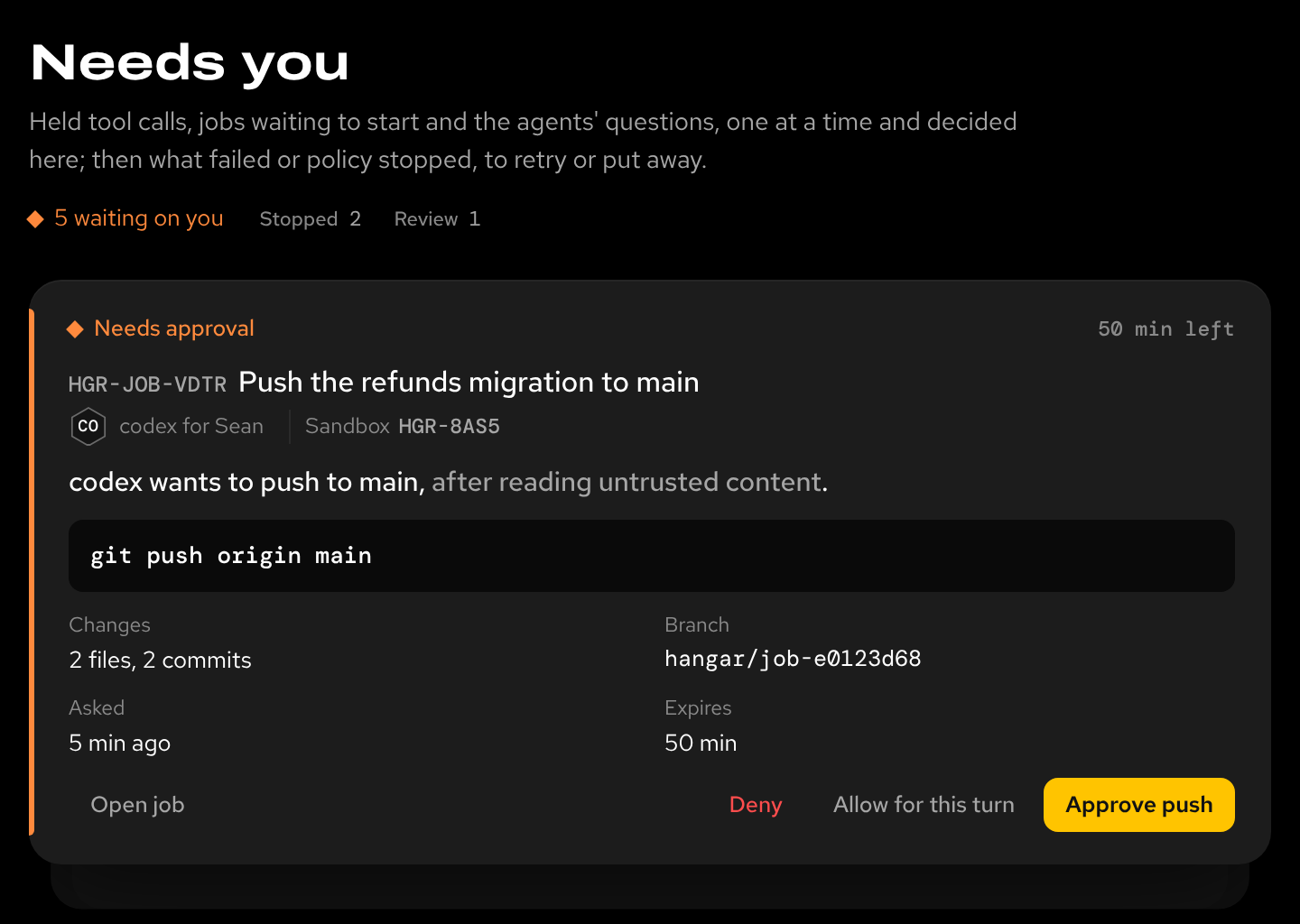
Review the change, reply to the agent
A job's detail carries the agent's summary, a composer and the change as a greyscale diff. Your reply runs the next turn; the PR updates.
- +5 −1 across 2 files, against the base commit, from the sandbox.
- Only a failing test lights a hunk; additions and deletions stay grey.
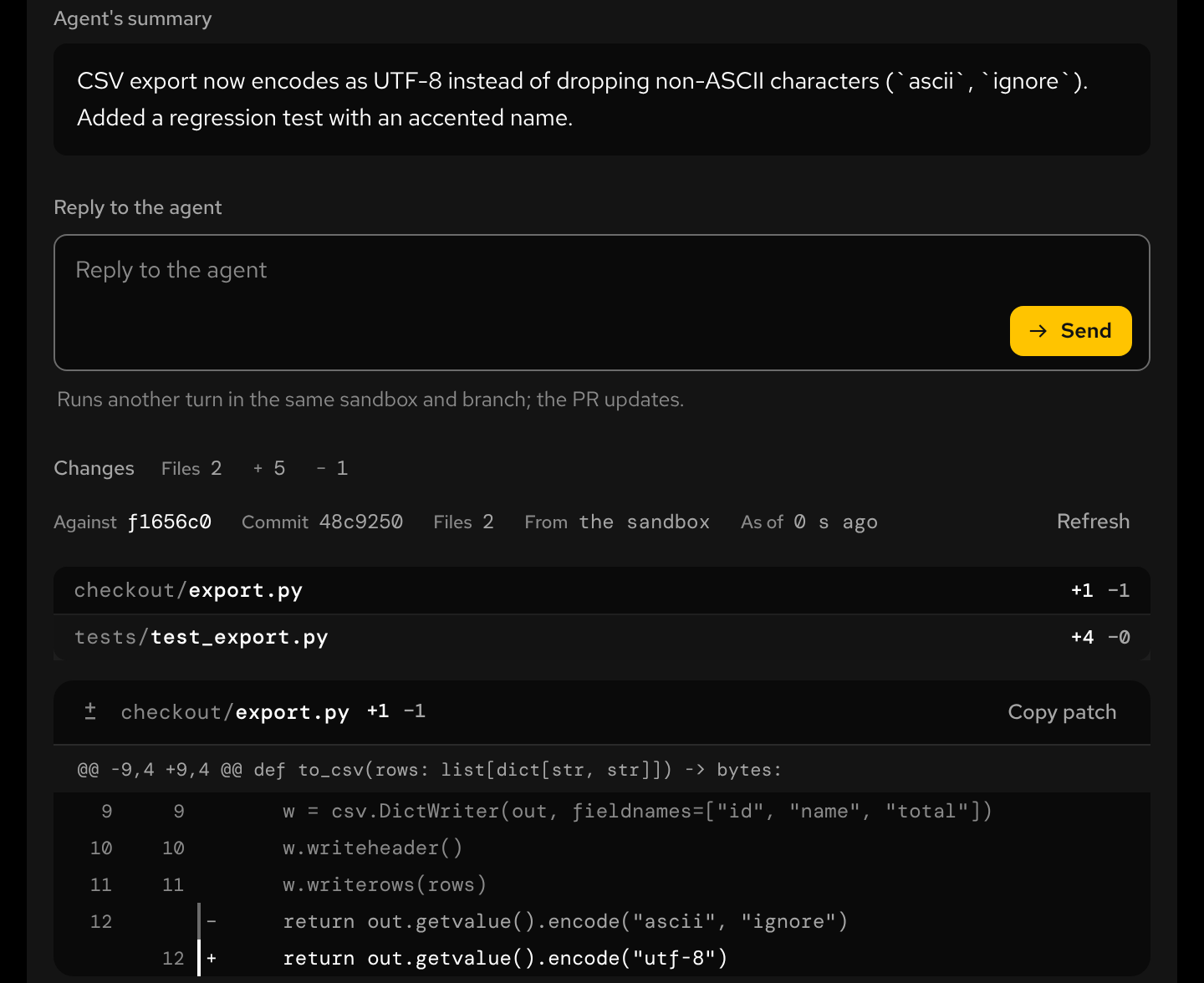
The whole fleet, one row per agent
List and Board are two views of the same agents. 25 of 120 slots in use.
- Each row shows what the agent is doing now, its owner and its stage: plan, edit, test, PR.
- Open an agent in place to decide what it holds without leaving the Fleet.
The verdict lands on the harness PR
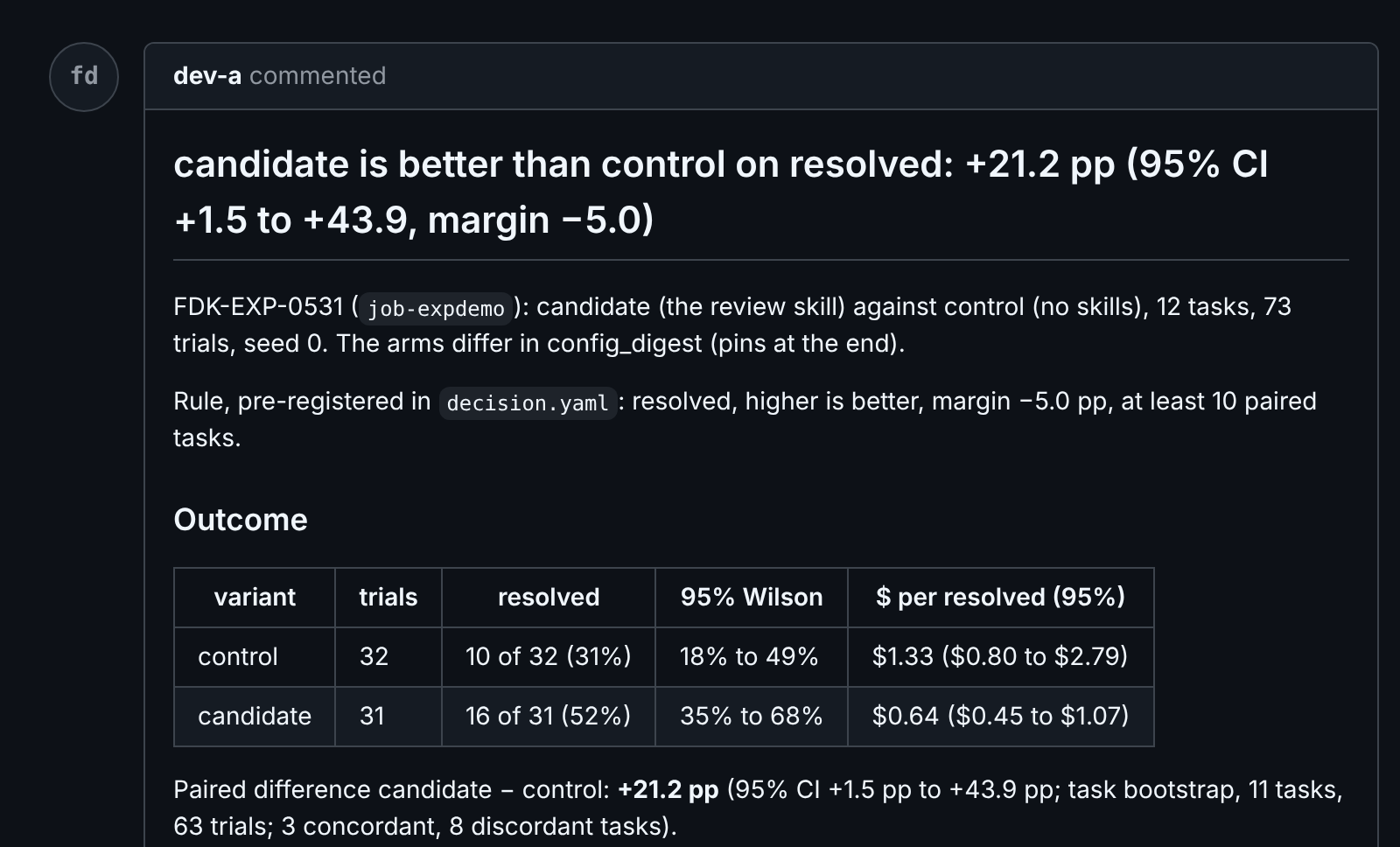
flightdeck posts one comment on the pull request that changes the harness and updates it in place: the verdict, both variants' pins, the outcome and its interval.
- Candidate is better than control on resolved: +21.2 pp, CI +1.5 to +43.9.
- Paired by task; infrastructure failures are excluded and listed.
The Desk: what needs you, what finished, who you approve for
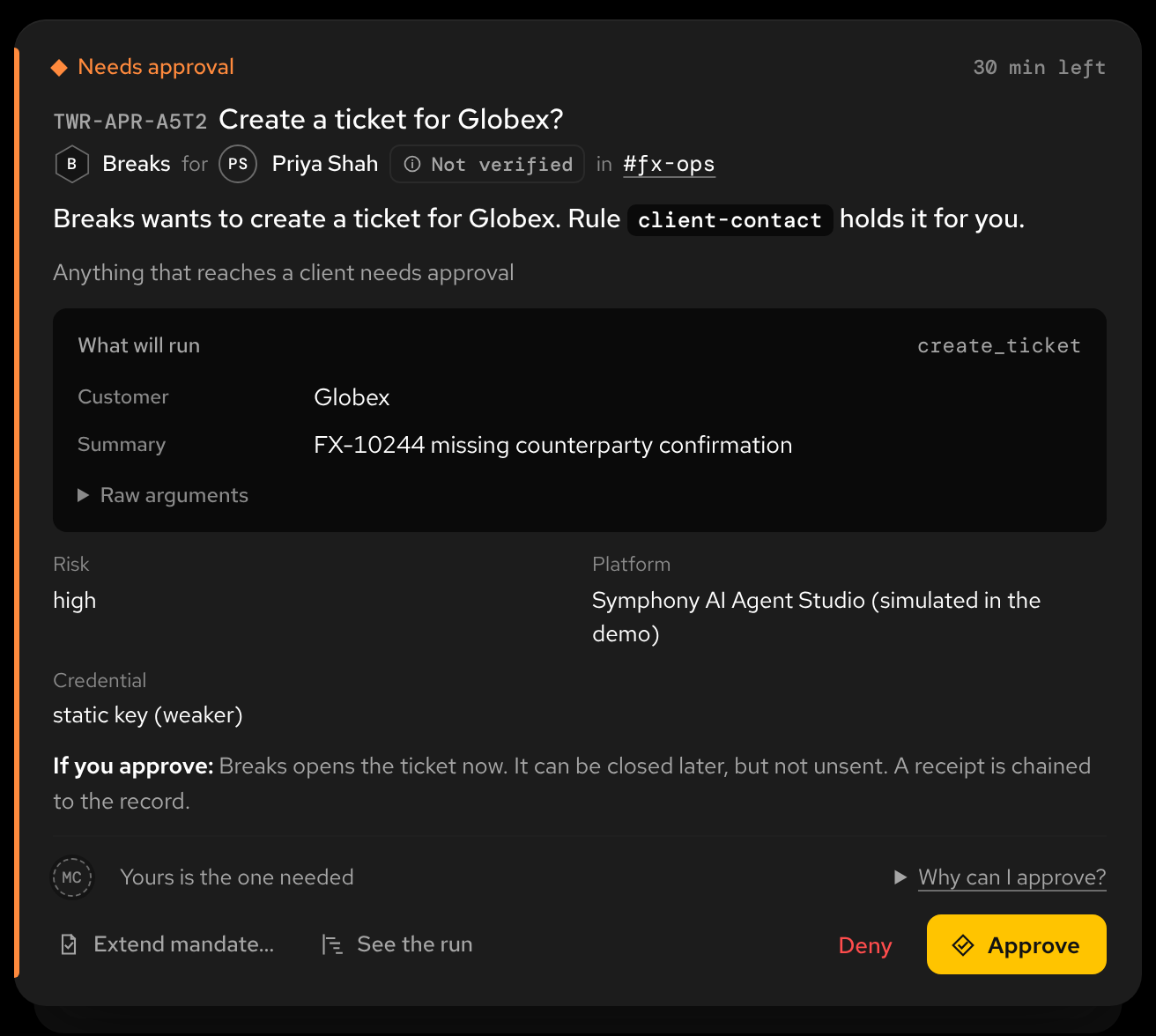
Tower's home for a person: start work, approve or deny the cards that need you, and see the day's receipts.
- Each card says what will run, why it asked and what approving does.
- Every decision files a receipt, chained into the record.
Business objects by reference
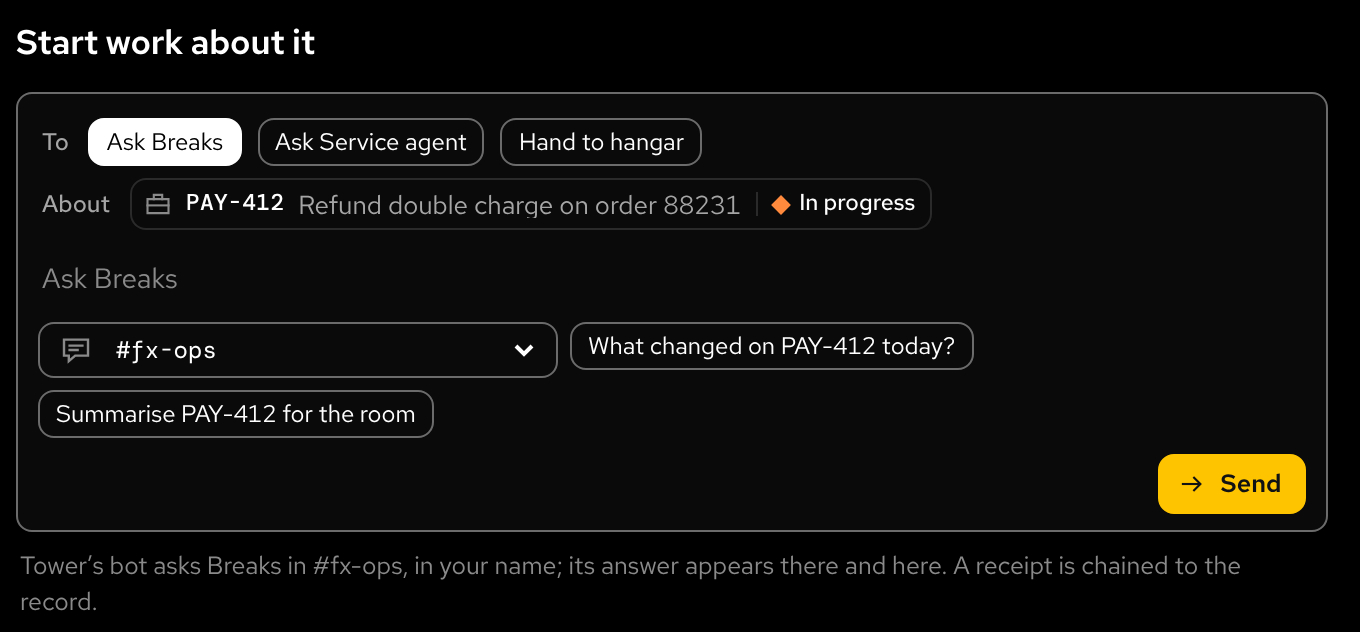
A Jira issue, a pull request, a hangar job: each is a chip, and each chip opens a page with what touched it and what is in play.
- Tower keeps a reference, never a copy; title and state are read from the source.
- The receipt carries the reference, hashed into the chain.
One design system, every screen
Airframe holds the parts a person needs to work with an agent: approval card, question, composer, diff, object chips. Every screen in this deck is built from it.
- Tokens and af- classes only; a test in each repo fails on a color literal.
- Night and Day, forced colors and reduced motion, in one stylesheet.